
Posted on Friday Jul 10, 2026 at 12:48PM in Lighting & Lighting Controls
Lumens, Watts, CCT, CRI, and DLC: What Lighting Buyers Should Know
Lumens tell you how much light a lamp or fixture produces. Watts tell you how much power it uses. CCT describes the color appearance of the light, such as warm, neutral, or cool white. CRI describes how accurately colors appear under that light. DLC refers to qualified commercial lighting products listed by the DesignLights Consortium. Buyers should compare all five before quoting, replacing, or approving LED lighting products.

Introduction
LED lighting specs can look simple until a buyer tries to compare two fixtures that both claim to be “bright,” “efficient,” or “commercial grade.”
For contractors, facility managers, property managers, builders, and purchasing teams, the details matter. A high bay, troffer, wall pack, lamp, occupancy sensor, or control device may look close on the surface, but the spec sheet can tell a different story.
This guide explains the lighting terms buyers should know before requesting a quote, visiting the counter, or approving a substitution. It is product education only. Final product selection should match the project documents, manufacturer instructions, customer requirements, and review by the appropriate qualified professional.
What lumens mean
Lumens measure light output. More lumens generally means more visible light. Fewer lumens generally means less visible light.
This matters because watts are not a reliable shortcut for brightness anymore. With LED products, two lamps or fixtures can use similar wattage but produce different lumen output. The FTC Lighting Facts label focuses the front of consumer lamp packaging on lumens, which are a measure of brightness, rather than watts, which measure energy use. The label also includes brightness, energy cost, life, light appearance, and wattage.
For commercial buyers, lumen output shows up on product pages, cut sheets, spec sheets, fixture schedules, and submittals. It is one of the first details to compare when replacing lamps or quoting LED fixtures.

Buyer note
Do not assume “higher lumens” automatically means “better.” The needed output depends on the space, fixture type, mounting height, optics, controls, layout, surface conditions, and project requirements. Those should be reviewed by a qualified lighting professional or engineer when layout or performance matters.
What watts mean
Watts measure power use. In lighting, wattage helps buyers compare energy consumption, circuit impact, and product efficiency, but it does not tell the whole story.
A 100-watt incandescent replacement lamp and an LED lamp may both be described with the same “equivalent” language, but the actual LED wattage will usually be lower. ENERGY STAR states that LED lighting products produce light up to 90% more efficiently than incandescent light bulbs.
For commercial and industrial LED luminaires, the U.S. Department of Energy provides acquisition guidance for buyers evaluating energy-efficient products.
Buyer note
When comparing LED products, look at both lumens and watts. The relationship between the two is often expressed as efficacy, usually shown as lumens per watt. Higher efficacy can be useful, but it should not override the required fixture type, CCT, CRI, controls compatibility, distribution, voltage, ratings, certifications, or project spec.
What CCT means
CCT stands for correlated color temperature. It describes the color appearance of white light and is measured in Kelvin, usually shown as K.
Common examples include:
- 2700K: warm white
- 3000K: warm white
- 3500K: neutral white
- 4000K: cool white or neutral/cool commercial white
- 5000K: daylight or cooler white
CCT is not brightness. A 3000K fixture and a 4000K fixture can have similar lumen output but look very different in the space.
The FTC Lighting Facts label includes light appearance, which reflects correlated color temperature, and presents it in Kelvin.
Buyer note
CCT should be checked against the project spec, existing lighting, customer preference, fixture schedule, and room use. Mixing color temperatures in the same area can create an uneven appearance, especially in offices, showrooms, retail areas, multifamily common areas, and finished commercial spaces.
What CRI means
CRI stands for Color Rendering Index. It describes how accurately colors appear under a light source compared with a reference light source.
CRI is usually shown on a scale from 0 to 100. Higher CRI generally means better color rendering. Many commercial LED products are commonly listed around 80 CRI, while higher color-quality applications may call for 90 CRI or better. Buyer requirements depend on the project, customer expectations, and manufacturer documentation.
CRI is different from CCT. CCT describes the color appearance of the light itself. CRI describes how objects, finishes, products, paint, clothing, food, or materials appear under that light.
Buyer note
CRI can matter more in spaces where appearance affects the customer experience or work quality. Examples include lighting showrooms, retail displays, hospitality areas, offices, medical-adjacent spaces, finish-selection areas, galleries, and any space where color perception matters.
Do not treat CRI alone as a complete quality score. Check manufacturer documentation, listed performance data, warranty terms, dimming behavior, CCT, lumen output, and product family options.
What DLC means
DLC refers to the DesignLights Consortium. In commercial lighting, buyers often use “DLC” as shorthand for a product listed on the DLC Qualified Products List, also called the DLC QPL.
The DLC describes its QPL as a verified list of high-performing and energy-saving LED lighting solutions. Products on the QPL undergo review to confirm they meet DLC energy and quality requirements.
DLC also says utilities and energy-efficiency programs use the QPL to validate product eligibility for rebates, while DLC itself does not sell products or set rebates.
Buyer note
DLC status can matter for commercial lighting quotes, utility incentive paperwork, public-sector purchasing, project specs, and approved substitutions. Always confirm the exact model number, product family, DLC listing status, CCT, wattage, lumen package, controls option, and version requirements before submitting or purchasing.
Quick comparison table
What Lighting Buyers Should Know | What it tells you | Why buyers should care | Why buyers should care |
| Lumens | Light output | Helps compare brightness between lamps and fixtures | Required output, fixture type, optics, mounting conditions, project spec |
| Watts | Power use | Helps compare energy use and fixture load | Actual wattage, voltage, driver, controls, manufacturer data |
| CCT | Color appearance of the light | Affects how warm, neutral, or cool the space looks | Project spec, existing lighting, customer preference, replacement match |
| CRI | Color rendering quality | Affects how colors, finishes, and materials appear | Minimum CRI, application needs, manufacturer documentation |
| DLC | Commercial lighting qualification listing | May matter for specs, purchasing, and rebate eligibility | Exact model listing, QPL status, product version, utility/program rules |
Who should care about these lighting terms
Electrical contractors
Contractors need clear product information when quoting, substituting, ordering, and coordinating with project documents. Lumens, watts, CCT, CRI, and DLC status can all affect whether a product matches the spec.
Facility managers and property managers
Maintenance teams often replace lamps and fixtures in phases. Matching CCT, lumen output, fixture type, and controls compatibility helps avoid uneven lighting across offices, warehouses, parking areas, corridors, and common spaces.
Builders and general contractors
GCs need lighting selections that align with the schedule, approved submittals, customer expectations, and the electrical contractor’s scope. A small product mismatch can create delays if the fixture does not match the spec or approval documents.
Landscapers and outdoor lighting buyers
For outdoor and landscape-related lighting, buyers should pay close attention to fixture type, CCT, lumen output, voltage, ratings, and manufacturer documentation. Product selection should be reviewed by the qualified professional responsible for the system.
Architects, designers, and showroom customers
CCT and CRI can strongly affect the look of finishes, paint colors, stone, tile, wood, fabrics, and displays. For finished spaces, bring finish samples, room photos, and fixture preferences when visiting a lighting showroom.
What to compare before buying LED fixtures or lamps
Before approving or ordering LED lighting products, compare the actual product data, not just the description.
Key details include:
- Manufacturer and full model number
- Fixture or lamp type
- Lumens
- Watts
- Voltage
- CCT
- CRI
- Dimming or controls compatibility
- DLC or ENERGY STAR status, when required
- Mounting type
- Distribution, beam angle, or optic
- Wet, damp, or dry location rating
- Emergency, battery, or sensor options, when applicable
- Warranty and manufacturer documentation
- Required accessories, trims, sensors, drivers, or control devices
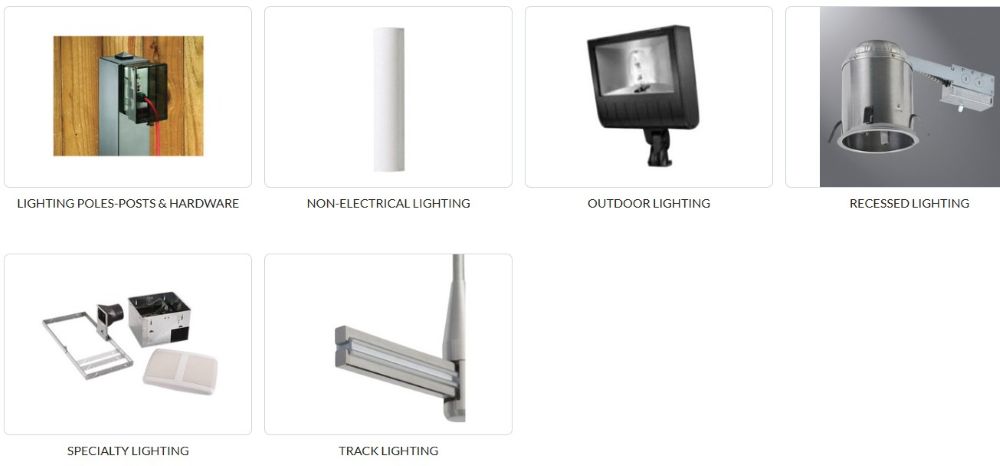
Revco’s Lighting category includes lamps, indoor lighting, outdoor lighting, recessed lighting, lighting controls and control systems, emergency lighting, landscape lighting, and related lighting categories.
Product category considerations
LED lamps
When replacing LED lamps, match the base, shape, voltage, lumen output, CCT, CRI, dimming requirements, and fixture compatibility. Do not rely only on incandescent-equivalent wattage.
High bays
High bays require closer review because lumen output, wattage, mounting height, distribution, sensor options, and controls can vary widely by product family. Revco’s indoor high bay category includes LED high bay fixtures with product filters such as voltage rating, fixture wattage, lamp type, and brand.
Troffers and panels
For offices, schools, medical offices, retail back-of-house areas, and commercial interiors, CCT and CRI can affect comfort and appearance. Confirm size, voltage, ceiling type, controls, emergency options, and spec requirements.
Lighting controls and occupancy sensors
Controls are not just add-ons. They can affect product compatibility, dimming behavior, energy performance, and user experience. Revco’s Lighting Controls & Control Systems category includes dimmers, photocontrols, occupancy and vacancy sensors, and control accessories.
Outdoor fixtures
For wall packs, area lights, floodlights, landscape lighting, and exterior fixtures, confirm location rating, distribution, mounting, finish, CCT, controls, photocell options, and manufacturer guidance. Do not assume an indoor product is suitable outdoors.
What to bring to the Revco counter or quote request
Bring the details that help the counter team, project team, or lighting specialist identify the product accurately.
For replacements, bring:
- Photos of the existing lamp or fixture
- Photo of the product label
- Manufacturer and model number, if readable
- Existing CCT and wattage
- Existing lamp shape, base, or fixture type
- Quantity needed
- Ceiling type or fixture location description
- Any spec sheet, fixture schedule, or approved submittal
- Required DLC or ENERGY STAR status, if applicable
- Dimming, sensor, or control requirements
- Job name, delivery needs, and preferred branch
For new projects, bring the fixture schedule, plans, spec section, approved equals list, finish requirements, controls narrative, and any customer preferences. Do not use this article as a substitute for a lighting design, code review, or engineered layout.
Common mistakes to avoid
Mistake 1: Buying by watts instead of lumens
Watts measure energy use. Lumens measure light output. A lower-watt LED may produce enough light, but buyers should confirm the actual lumen output and application requirements.
Mistake 2: Mixing CCTs by accident
A 3000K lamp and a 4000K lamp may both be white light, but they can look very different when installed in the same area.
Mistake 3: Ignoring CRI in finished spaces
CRI may not be the top concern in every warehouse or utility space, but it can matter in showrooms, offices, retail areas, hospitality spaces, and finish-sensitive environments.
Mistake 4: Assuming DLC means every rebate is approved
DLC listing may be required by a utility or efficiency program, but rebate rules are set by the program, not by Revco or DLC. Confirm the exact model and program requirements before purchasing for an incentive.
Mistake 5: Approving a substitution without matching the spec
A substitute should be checked against the project documents, manufacturer data, controls, ratings, CCT, CRI, lumen package, dimensions, accessories, and approval process.
What to confirm with a qualified professional
Confirm these items before purchase when the project requires them:
- Lighting layout
- Fixture counts
- Mounting heights
- Illumination levels
- Code compliance
- Emergency lighting requirements
- Controls requirements
- Load, wiring, panel, or circuit impact
- Utility incentive eligibility
- Product substitutions
- Wet, damp, hazardous, or special-location suitability
- Final installation method
These decisions may require a licensed electrician, engineer, lighting designer, inspector, AHJ, manufacturer, or other qualified professional.
How Revco can help
Revco Lighting & Electrical Supply serves Suffolk County and Long Island with six branch locations: Southampton, East Hampton, Southold, Riverhead, Bohemia, and Rocky Point. Revco’s website identifies account sign-in or registration and lists all six locations in the main site header.
Revco can support lighting buyers with product category browsing, quote preparation, branch counter support, lighting showroom planning, and project team coordination. Revco’s Dedicated Project Team page says the team supports lighting and electrical projects with guidance, quotes, and resources.
For product-level availability and account pricing, log in to your Revco web account where available. For more involved project work, submit a quote request or contact your nearest Revco branch.
FAQ
What is the difference between lumens and watts?
Lumens measure light output. Watts measure power use. For LED lighting, compare lumens when judging brightness and watts when judging energy consumption.
Is CCT the same as brightness?
No. CCT describes the color appearance of light, such as warm white or cool white. Brightness is measured in lumens.
What does CRI mean in lighting?
CRI stands for Color Rendering Index. It describes how accurately colors appear under a light source. Higher CRI can matter in spaces where color appearance is important.
What does DLC mean for commercial lighting?
DLC usually refers to products listed on the DesignLights Consortium Qualified Products List. DLC listing may matter for commercial specs, purchasing requirements, or utility incentive programs.
Is DLC the same as ENERGY STAR?
No. DLC is commonly used for many commercial lighting products. ENERGY STAR is often associated with consumer and residential energy-efficient products. Always check the project spec or program requirement.
Can I replace a fixture just by matching watts?
No. Matching watts alone is not enough. Confirm lumens, CCT, CRI, voltage, fixture type, controls, ratings, dimensions, and manufacturer documentation.
Should I choose 3000K, 4000K, or 5000K?
It depends on the space, existing lighting, customer preference, and project spec. Finished spaces often need closer CCT review because mismatched color temperature can be noticeable.
Can Revco confirm whether a product matches my project spec?
Revco can help identify products and quote materials, but final approval should follow the project documents and review by the appropriate qualified professional, such as the electrician, engineer, lighting designer, inspector, AHJ, or manufacturer.
Request a lighting quote from Revco.
Send the fixture schedule, product numbers, photos, CCT, CRI, lumen requirements, DLC needs, and controls information so Revco can help identify the right product options for review.
Visit your nearest Revco branch.
Bring photos, labels, part numbers, or a fixture schedule to the counter for product identification and quote support.
Create or log in to your Revco web account.
Use your account to view available product details, account pricing where available, and branch availability on product pages.
Editorial note
This article is for product education and quote preparation only. It does not replace licensed electrical work, lighting design, engineering review, code interpretation, inspection requirements, AHJ direction, utility program rules, or manufacturer installation instructions. Always confirm final product selection with the qualified professional responsible for the project.